


Understand the significance of a detailed ROI analysis
When you invest in traditional TV advertising, you want to be certain your efforts pay off. A detailed traditional TV advertising ROI analysis helps you see exactly how your ads perform relative to the money spent. It also reveals whether you’re targeting the right viewers and connecting with people who are genuinely interested in your product or service. Without this analysis, you might spend more of your budget than necessary on airtime that isn’t delivering the results you need.

A thorough ROI analysis includes a mix of both quantitative and qualitative data so you can understand how each ad influences consumer actions. In other words, you’ll look at short-term gains, such as immediate sales, and long-term benefits, like brand recognition. This fuller view of where your money goes helps you make smarter decisions, especially when you’re comparing traditional TV ads with other channels like Connected TV (CTV), social media, or search campaigns.
Explore cost efficiency beyond initial impressions
Many advertisers stop at counting impressions or reach, which only gives you part of the story. While traditional TV ads can quickly generate widespread awareness, their cost may be higher compared to newer alternatives. The time of day your commercial airs also matters. Prime-time spots often carry steep price tags without always guaranteeing proportional results.
Digging deeper into cost efficiency involves focusing on metrics tied to your core goals. If customer sign-ups or store visits are your key objectives, you should measure how many sign-ups or visits each TV ad spurs. It’s easy to get lured by the glamour of being seen on a major network, but you should always confirm head-turning ad placements make sense for your target market. After all, a huge audience is less impactful if only a fraction of that audience is actually interested in your offering.
Recognize the demographic factor
You often pay a premium to advertise on traditional TV networks because you’re reaching a large, general audience. Yet not all viewers align with your intended customer profile. Someone tuning in for sports might have a completely different set of interests than a viewer who watches dramas or cooking shows. This mismatch can lead to wasted ad spend if only a small portion of viewers convert into actual customers.
Audience data can help you pinpoint networks, programs, and time slots that draw people who share your customers’ traits and purchasing behaviors. When your traditional TV advertising ROI analysis includes demographic insights, you gain a sharper perspective on which segments your messaging resonates with, and you can refine your campaign placements accordingly. These small adjustments often make a big difference in your overall return on investment.
Gather the right data for measurement
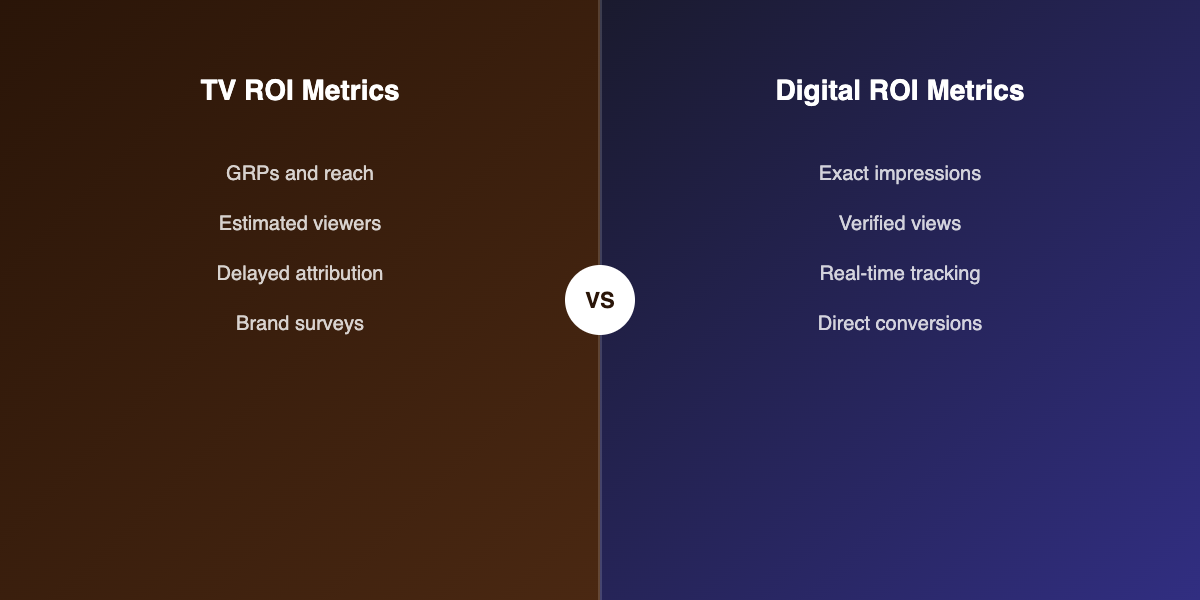
Effective ROI analysis depends on accurate data collection. If you only know how many people watched your ad, you’re only scratching the surface. Ideally, you should track a variety of metrics that reveal how your commercial influences buying decisions. These might include unique coupon redemptions, store foot traffic during the hours your ad runs, website inquiries, or direct calls after the ad airs.
Below are four key metrics you might consider monitoring for a more thorough accounting of your ad’s performance:
- Lift in brand searches: Check if people search online for your brand immediately after your TV spot runs.
- Spike in direct website visits: Pay attention to any surges in site traffic when your ad is broadcast.
- Attributed sales conversions: Determine how many purchases can be reasonably tied to seeing or hearing your commercial.
- Audience retention: Gauge how many viewers stay tuned for your full advertisement or how many follow a call-to-action link.
These data points not only show when something works but also highlight the aspects of your ad or placement that need improvement.
Compare traditional TV to CTV
If you’re evaluating your television ad budget, you’ve probably noticed the industry shift toward Connected TV platforms. CTV offers more precise targeting capabilities, so your message only lands in front of people who match your desired criteria. In this sense, CTV can be more cost-effective per lead because you’re avoiding the broad-stroke approach of traditional cable TV. Plus, advanced analytics platforms measure viewer engagement in real time, letting you optimize campaigns on the fly.
For a deeper dive into how new tech-based channels measure up, check out ctv vs linear tv advertising effectiveness. That comparison will help you decide whether a fully traditional TV strategy, a purely CTV approach, or a combined plan works best for your unique goals and resources.
Refine and reinvest for higher returns
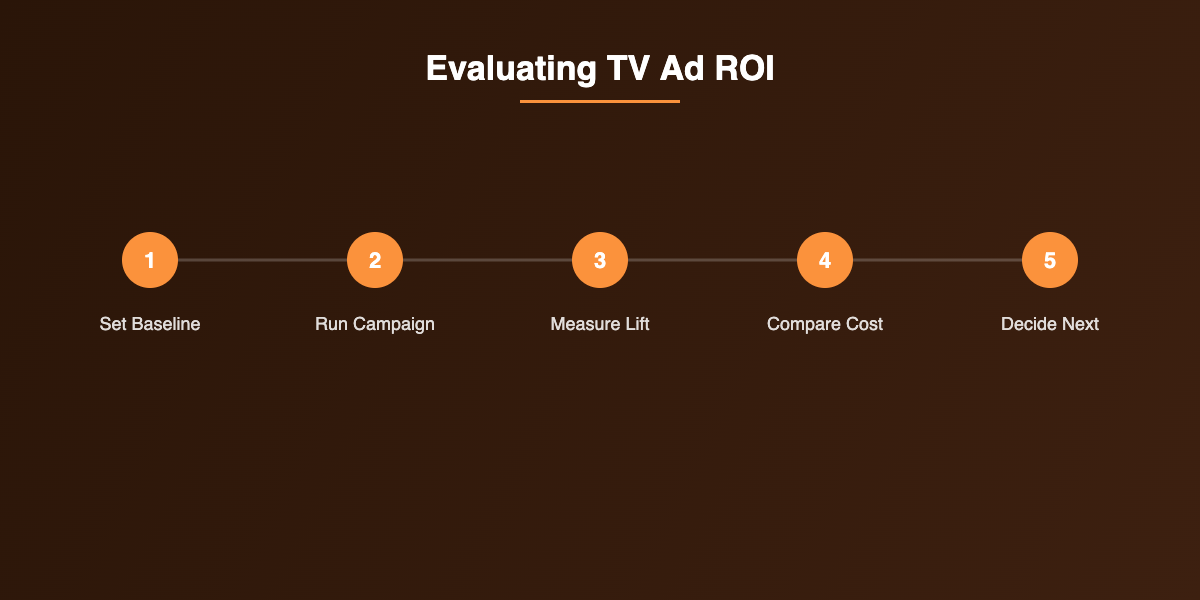
After you’ve analyzed your data, you’ll have two critical items in hand: a clearer view of where your money goes and a roadmap for enhancing future campaigns. If your ad underperformed on certain channels or time slots, consider shifting budgets to areas where it resonated well. This is where ongoing testing becomes your ally. You might switch a 30-second spot to a 15-second teaser or change the creative elements to see if results improve.
Remember, ROI analysis isn’t a one-and-done process. Developing effective TV ads requires consistent monitoring, recalibration, and the willingness to pivot when evidence suggests a new direction. Over time, you’ll build up a robust knowledge base about which networks, messaging, and formats generate the highest returns for you.
Embrace hybrid strategies
When you harness both traditional TV and CTV, you tap into a powerful dual approach: broad brand-building plus laser-focused targeting. You can use traditional TV to build prestige and broad awareness, then refine your message through CTV for specific audience segments. Each method complements the other, and your holistic assessment of ROI data helps you deploy resources more efficiently.
Ultimately, what matters is finding the balance that aligns with your budget and objectives. By combining the tangible visibility of traditional broadcasting with the precise metrics of modern platforms, you maximize your overall marketing reach and enhance the likelihood that viewers will convert into loyal customers.
If you’re shifting budget from traditional TV, consider redirecting to optimized Google Ads campaigns for measurable ROI, and invest in SEO-optimized web design to capture organic traffic long-term.
Final thoughts
Performing a traditional TV advertising ROI analysis might not sound as exciting as creating a catchy new commercial, but it’s essential if you want to spend your advertising budget responsibly. By drilling into cost efficiency, demographics, and performance metrics, you’ll uncover which factors truly drive your business forward. You’ll also know exactly where you might benefit from adding CTV campaigns into the mix.
Above all, keep your process thorough, flexible, and focused on real, measurable outcomes. Data rarely lies, so trust the numbers when planning your next move. When each run of your commercial brings in verifiable results, you’ll feel confident that your combined TV strategy is delivering value, connecting with the right audience, and boosting your brand’s success in a competitive marketplace.