

Recognize the basics of CTV
Connected TV (CTV) blends the power of traditional television with the precision of digital advertising. Instead of buying ad slots during regularly scheduled broadcasts, you place your messages on streaming platforms accessed through smart TVs, set-top devices, or gaming consoles. This approach opens up a wider world of on-demand shows, allowing you to present your ads to viewers who choose their own viewing schedules.
Because CTV doesn’t rely on specific channels or traditional programming grids, you have the flexibility to refine your messaging for multiple audiences. If you want to run a campaign aimed at sports enthusiasts, you can invest in ad inventory through sports streaming services. If another segment of your customer base watches cooking shows on an app, you can tailor a separate creative message for them. This level of customization is often what sets CTV apart from the traditional or “linear” TV model.
Compare audience targeting capabilities
One of the biggest differences in CTV vs linear TV advertising effectiveness involves how precisely you can reach your chosen audience. Linear TV typically relies on broad demographic estimates based on the show or channel you select. You might place a 30-second commercial during a primetime drama that generally draws viewers aged 25 to 54, but you don’t have the power to refine your message further.
CTV, on the other hand, can pinpoint your audience based on behavioral factors and viewing habits. For instance, you can target viewers who have previously shown interest in automotive products or have recently visited a website related to travel. This heightened precision means your ads are shown to people who already exhibit behaviors connected to your offering. When your messaging is that relevant, your budget can stretch further because every impression is more likely to resonate with potential customers.
By using this deeper data, you can also run multiple versions of the same core ad, each with a specific hook that appeals to a different subset of your market. If you’d like to dig deeper into how these targeted ads can benefit your bottom line, you might explore ctv advertising roi comparison and see how businesses tailor campaigns for better returns.
Evaluate cost-effectiveness for budgets
Traditional TV advertising often comes with high production and placement costs, largely because you pay for broad reach on major networks. While you can capture a large audience in a single timeslot, it’s not always easy to ensure your ad is fully relevant to everyone watching. This makes it harder to calculate if the hefty investment directly boosts sales. If you’re curious about the profitability of these bigger spends, you can check out a traditional tv advertising roi analysis to see typical cost structures and returns.
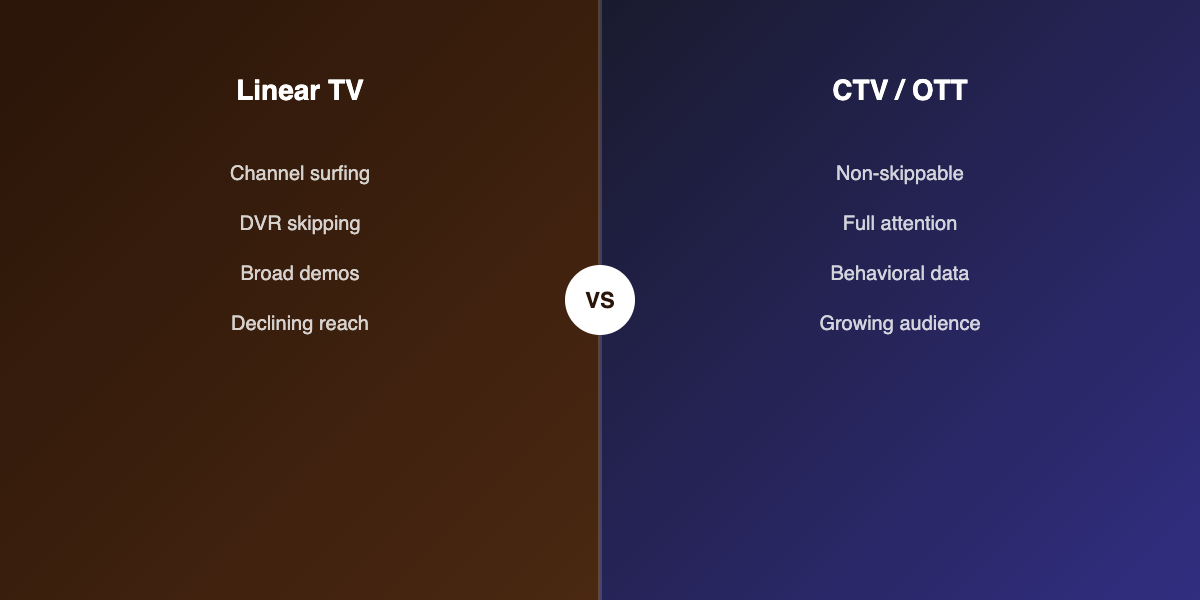
CTV advertising often appears more efficient because you pay just for the impressions you want. It’s possible to run shorter or more frequent ads to specific viewer segments, rather than placing a single expensive commercial during one major primetime event. Because each ad can be fine-tuned to the viewer’s preferences or previous shopping habits, the engagement rates may be higher than when advertising to an unfiltered audience.
Below is a quick comparison of key factors that can influence your budget:
| Factor | CTV Ads | Linear TV Ads |
|---|---|---|
| Audience reach | Highly targeted, flexible based on viewer profiles | Broad demographic, via scheduled programming |
| Cost structure | Often based on per-impression or performance rates | High flat fee, paying for wide but less specific reach |
| Ad formats | Multiple lengths, interactive options | Typically standard-length commercials (15-30 seconds) |
| Measurement | Real-time analytics, digital tracking | Limited by traditional ratings and viewer estimates |
| Typical ROI | Potentially stronger for niche products | Higher variance, depending on daypart and network |
If you have a limited budget, you might lean toward CTV’s targeted approach to minimize wasted impressions. But if your goal is a big branding push to a broad audience, linear TV can still offer a powerful impact. Choosing wisely means knowing how each avenue aligns with your marketing objectives as well as your available ad spend.
Track ROI for better insights
Measuring how well your ads perform is critical no matter which platform you choose. With CTV, you have access to advanced analytics that track conversions, website visits, and even post-ad purchase behavior. By linking your campaign data to your sales funnel, you can see which segments respond best, how many viewers actually took action, and how quickly your ad investment pays off. This is where tools for ctv advertising return on investment can guide you in creating detailed performance reports.
Linear TV, by contrast, often depends on ratings systems and market research panels. While that can help you estimate viewership and brand lift, it rarely paints a complete picture of how familiar these prospects are with your product or how many of them make a purchase. You might experience spikes in web traffic after a commercial runs, but pinpointing the exact reason for that spike can be more challenging. If you want a deeper look at how various measurement models can affect your bottom line, you can investigate the roi of connected tv advertising to see how digital metrics differ from traditional ones.
When you gather these insights, you can optimize future campaigns. For instance, if you notice that mid-roll ads during streaming comedies generate higher click-through rates than pre-roll ads in documentaries, you can shift your spend accordingly. Over time, small tweaks to your targeting or creative approach can add up to a significant improvement in overall effectiveness.
Once you’ve chosen CTV, maximize your full marketing mix. Google Ads campaign management for dental practices shows how targeted PPC complements awareness campaigns, and Gainesville SEO services ensure your website ranks for the searches your ads generate.
Make your final decision
Choosing between CTV and linear TV depends on your unique goals and resources. If your objective is mass awareness across a broad audience, linear TV can deliver a high-volume reach that might help you solidify your brand image. On the flip side, if you have tighter budgets or want more control over who sees your ads, CTV’s data-driven precision could give you a better return per dollar spent.
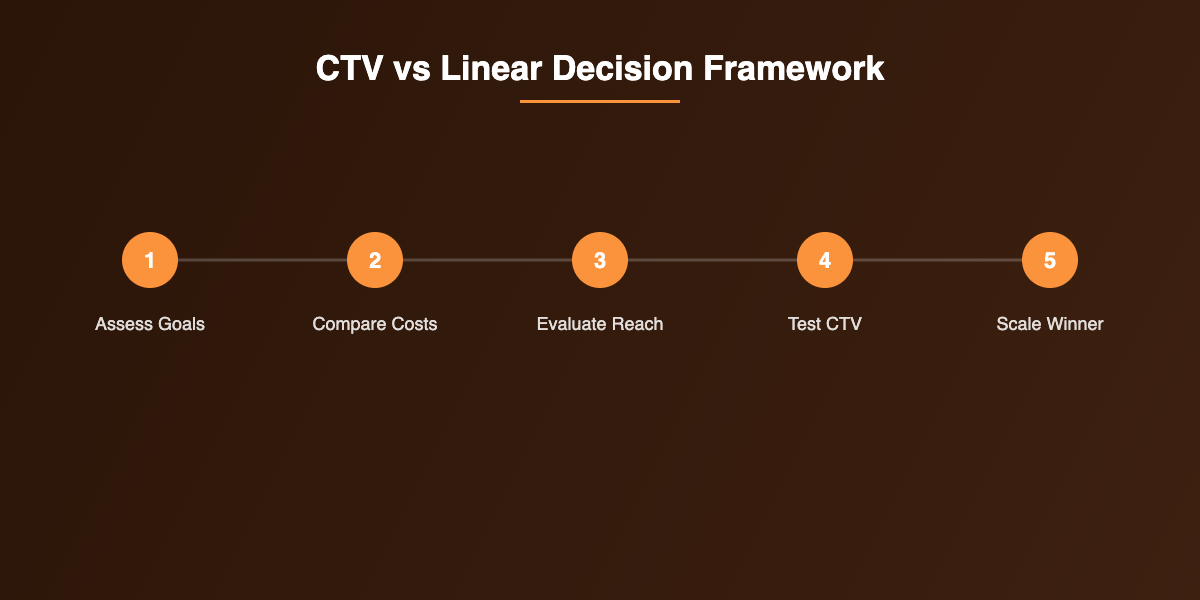
In many cases, the best approach involves a combination of both — you might use linear TV for larger visibility and brand prestige, then layer on CTV campaigns to zero in on the highest-value segments. This hybrid approach ensures you’re spreading the word to millions, while still following up with more personalized messaging. Over time, observing how both channels perform in tandem can give you a clearer picture of what to scale up or dial down.
Ultimately, you’ll want to consider whether your brand needs the targeting perks of CTV or the mass viewership of linear TV. By reviewing your own sales data, campaign objectives, and how you plan to measure success, you can take your advertising budget further. Whether you choose to focus on digital streaming channels or classic television spots, what matters most is how your marketing strategy aligns with the audience you’re trying to reach — and how well it boosts your bottom line when everything is said and done.