

Explore your ad landscape
If you are looking for a clear ctv advertising roi comparison, you might be wondering how streaming commercials stack up against traditional TV ads. CTV advertising has seen a surge in popularity because it promises more precise targeting, data-driven insights, and flexible budgets. However, you may still be uncertain whether its advantages outweigh a tried-and-true broadcast approach. The good news is that comparing connected TV campaigns to standard television commercials does not have to be daunting, especially when you focus on your growth goals and the unique benefits each medium provides.

As you begin your research, keep in mind that CTV can encompass ads on streaming platforms, over-the-top (OTT) services, and connected devices like smart TVs. Meanwhile, traditional cable TV remains a familiar, albeit broad, way to reach large audiences. If you want a deeper dive into performance measures, consider reading our guides on ctv advertising return on investment and roi of connected tv advertising. They unpack key metrics you can use to measure success and estimate your potential returns.
Compare upfront costs
One of the most crucial differences between connected TV and traditional TV advertising lies in how each medium manages startup expenses. In a traditional broadcast scenario, you usually face higher upfront costs. You are likely paying for a time slot that airs to a wide audience, but it may include viewers who have no interest in your product. While this broad reach is sometimes useful, you want to confirm that those extra dollars truly bolster your bottom line.
CTV campaigns, on the other hand, typically offer more flexibility. You often have the option to set smaller budgets or run shorter ad flights, which lowers your risk if you are just venturing into new terrain. This pay-as-you-go method also makes it easier to adjust your spending after seeing early results, rather than locking in a large sum for weeks at a time. For further reading on defining and analyzing these structures, check out our traditional tv advertising roi analysis.
Evaluate performance metrics
One of the reasons many advertisers pivot to CTV is the opportunity to measure performance with greater precision. When you run a connected TV spot, you can track click-through rates, conversions, and even cross-device activity if you link your campaign data. Traditional TV ads also offer some metrics, but it is generally harder to attribute exact consumer actions to a single broadcast commercial.
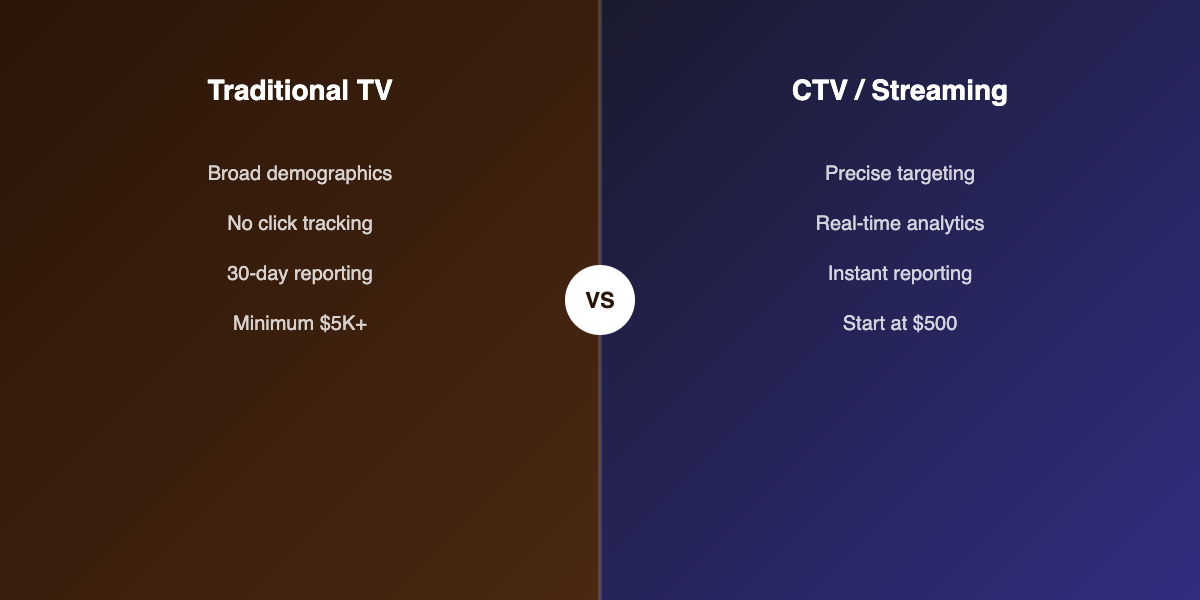
Below is a quick comparison that highlights how these channels stack up on key metrics:
| Metric | CTV Ads | Traditional TV Ads |
|---|---|---|
| Budget | Flexible, with lower minimums or adjustable spends | Higher fixed costs, must pay for broad timeslot packages |
| Targeting | Narrow, data-driven audience segments | Wider, less personalized reach |
| Measurability | Precise analytics, cross-device tracking | Limited response data, often measured through post-campaign surveys |
| Engagement | Often more interactive (clicked or tapped to learn more) | Passive experience, limited viewer interaction |
Because you can see how viewers respond directly to connected TV ads, you gain valuable insights for refining your strategy. With traditional TV, you might instead focus on brand lift, market share, or simplified attribution. Each approach has its benefits, but CTV can be a game-changer if you want regularly updated data to optimize how you spend your budget.
Balance your targeting strategies
You also benefit from thinking about how well each form of advertising aligns with your brand’s market segments. If you want to speak directly to a more niche audience — for instance, tech-savvy millennials or local foodies — connected TV works well with advanced targeting features. By tailoring your campaigns, you can stretch your advertising dollars further and zero in on the people most likely to engage. For additional context on how this focus compares to cable’s wide net, see our discussion of ctv vs linear tv advertising effectiveness.
Still, there is something to be said for the broad awareness traditional TV ads create. A single spot on a popular station or during a major event can put your brand in front of thousands, if not millions, of viewers at once. The key is to weigh whether you want to cover more ground or aim for deeper engagement with a specific demographic. Whichever tactic you choose, stay flexible and ready to adapt as your metrics roll in.
CTV works even better when paired with performance channels. See how Google Ads ecommerce strategies capture the demand your CTV ads create, and make sure your website is optimized to convert that traffic.
Make the right investment
Choosing where to invest your advertising dollars might feel like a huge responsibility, but you have more control than ever before. Start with a pilot campaign to see whether you are getting the returns you want. If a short run on CTV proves effective, you can scale up and solidify your approach. Alternatively, if your business thrives on broad consumer awareness, a traditional TV schedule could still be a strong fit.
A lot of companies find success in mixing channels. You might air a broadcast spot during a regional event, then run specialized CTV ads to retarget interested viewers. By combining both strategies, you balance the sweeping effect of traditional TV with the precise personalization of connected TV.
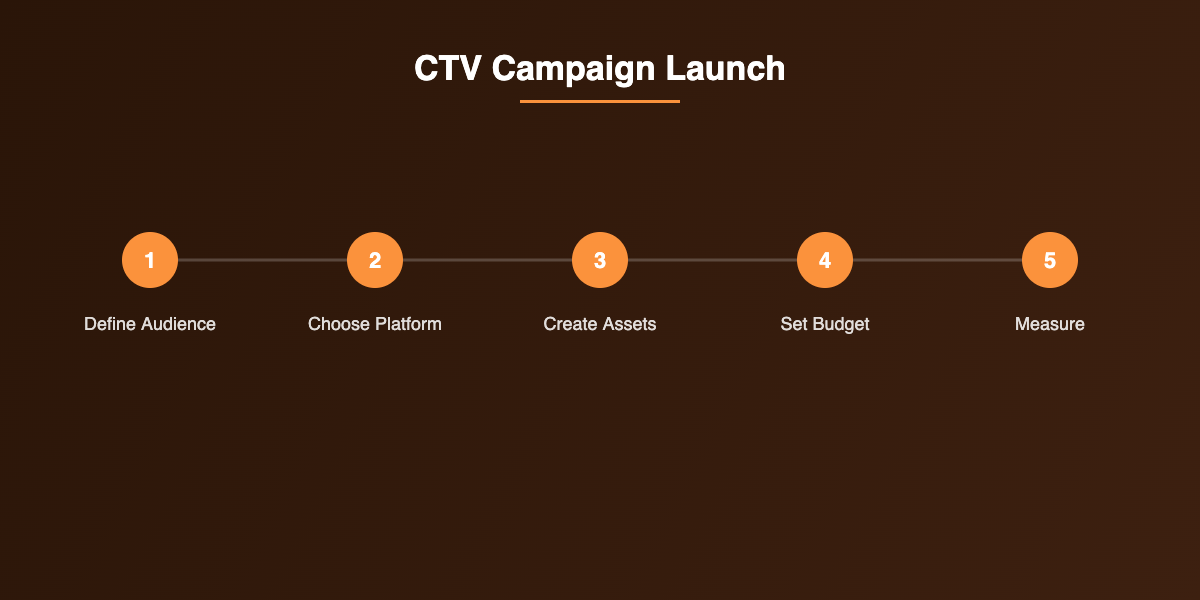
When you decide the best path for your brand’s expansion, return to your core goals. Do you want to drive immediate sales, build evergreen brand awareness, or generate leads for future campaigns? Make sure each advertising channel you select moves you closer to the outcomes you need. You can certainly combine both approaches without draining your budget, especially once you measure performance and refine any elements that did not meet your expectations.
Remember, investing in CTV does not mean turning your back on everything that traditional TV offers. Instead, it represents a new tool that complements classic broadcast strategies. By focusing on your unique value proposition and carefully tracking results, you can ensure each dollar spent moves your brand toward stronger returns.