

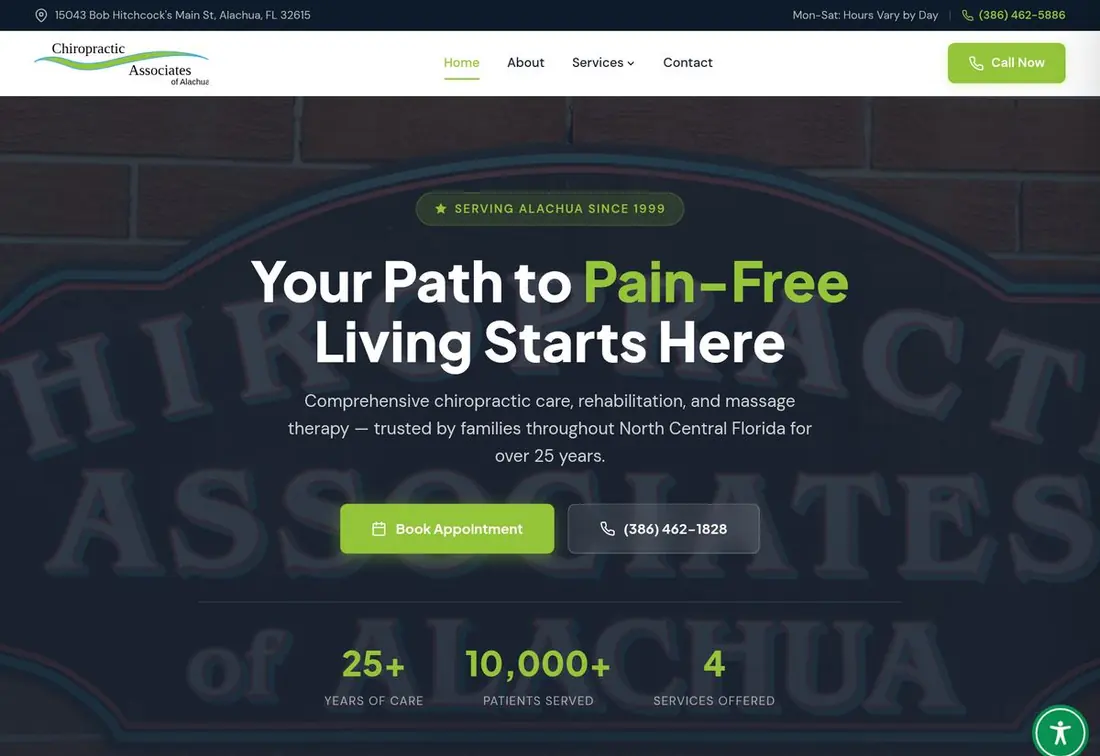
Your website looks sharp, but the phone stays quiet. Effective web design for contractors connects the entire path from finding your business to requesting help and booking work, including what happens after the form lands in your inbox.
Your Website’s job is to turn interest into booked work
Attractive design alone does not book jobs. Your website needs clear service information, believable proof, easy contact options, and a follow-up process that holds up when your office gets busy.
Keep three outcomes separate. A website inquiry is a call or submission. A qualified lead is a real project within your services, coverage, and capacity. A booked job is accepted work, not merely a scheduled estimate.
That distinction belongs in your website proposal. “More leads” means little without agreement on lead quality, tracking, and responsibility for responding.
Your purchase criteria should follow the same logic: help the right customer find answers, remove friction from contacting your business, and give every inquiry an owner. Fancy transitions come later, if at all.
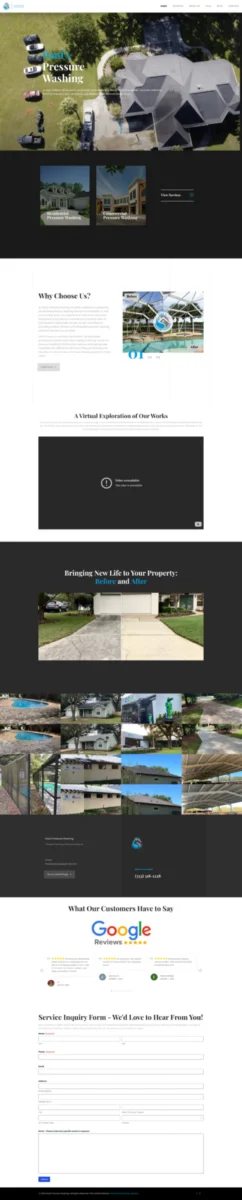
Contractor website examples: what to borrow, not just admire
Use contractor website examples to compare buying journeys, not declare winners based on appearance. Screenshots show layout; live mobile testing reveals navigation, contact behavior, and friction. Neither proves booked-job performance without access to business results.
For each example below, compare the current desktop and phone experience before approving a similar direction. Capture dated screenshots during your agency’s review so design decisions rest on the current website rather than an old showcase entry.
Roofing and residential service: secured roofing & restoration
Use Secured Roofing & Restoration as a residential-service reference. Your evaluation should establish how quickly you can identify the available services, coverage, credibility, and next action.
For your roofing, HVAC, or plumbing website, prioritize visible phone access and reviews relevant to the service being researched. A roof-repair customer needs different reassurance from a roof-replacement shopper.
Keep urgent-service calls separate from routine estimate requests. Borrow the logic behind the contact path, not decorative styling. For deeper trade-specific criteria, examine how roof shoppers evaluate contractors.
Remodeling: the kitchen master
Use The Kitchen Master as a reference for a considered remodeling purchase. Evaluate project photography, service navigation, and the route toward a consultation.
Your portfolio should explain the work behind the image: scope, general location, materials, timeline, and constraints. “Kitchen renovation in Gainesville with cabinet replacement, quartz counters, and an unchanged plumbing layout” gives a customer more useful information than “beautiful transformation.”
Pair before-and-after views where available. Get client permission for photographs and identifying details, and avoid publishing addresses or personal belongings without approval. Remodeling buyers need evidence of planning and execution, not just a quick route to a phone call.
Commercial construction: continental electrical construction company
Use Continental Electrical Construction Company to frame a different evaluation: capabilities, relevant project information, qualifications, and contact routes.
Your commercial construction company website should support procurement. Publish accurate safety information, relevant sector experience, downloadable capabilities, and a clear bid-inquiry process. Explain where specifications or bid documents belong and who handles submissions.
Keep residential urgency tactics out of commercial qualification. A purchasing manager reviewing electrical construction capabilities needs evidence of capacity, experience, and fit before discussing an award.
The website features worth paying for
The traditional seven C’s offer a useful check when translated into plain English. Context means clear organization. Content answers project questions. Community provides genuine customer evidence. Customization supports relevant customer paths. Communication makes contact easy. Connection joins your site to useful systems. Commerce gives customers a clear route toward hiring, without forcing online checkout.
Use those checks to prioritize function before decoration.
Fast, mobile-friendly pages with obvious next steps
Your phone layout deserves first review, not final inspection. Require readable text, simple menus, compressed images, generous tap targets, and a clear primary action. Keep click-to-call access prominent without covering page content.
Accessibility belongs in the build. Text needs readable contrast, form fields need visible labels, and navigation must work without a mouse. Error messages should identify the problem and explain the fix.
Oversized videos and decorative effects add little when your estimate form breaks on a phone. Require measured mobile performance on representative pages, not a speed score from an empty homepage.
Reviews, credentials, and photos that earn trust
Place relevant testimonials beside service details and contact prompts. Link to verifiable review profiles, and use accurate licensing and insurance information.
Show your actual crew, vehicles, and jobsites. Stock-photo-only sites, unsupported badges, and “best contractor” claims leave customers with claims instead of evidence.
Review management matters beyond design. BrightLocal research summarized by CallRail found 88% of consumers would use a business that responds to all reviews, compared with 47% for a business that never responds.
Build a site map around your services and actual coverage
Start with a practical structure: Home, Services, Service Areas, Projects, About, Reviews, and Contact or Request an Estimate. Add depth where customer needs justify it.
Clear organization helps customers find answers and gives search engines a more understandable picture of your business. Each page should have a purpose, a place in navigation, and a useful next action.
When you need separate trade and service pages
If your business handles roofing, HVAC, and plumbing, give each trade a distinct section. Within roofing, repair and replacement deserve separate pages when the scope, questions, project evidence, and contact intent differ.
A repair page should explain problem assessment and repair availability. A replacement page should cover materials, project planning, and replacement examples.
Avoid paying for page count. Ten useful pages beat thirty thin pages that repeat the same promises. Your proposal should name each planned page and explain its role.
When a Gainesville or service-area page adds value
A Gainesville page adds value when your content explains actual coverage, relevant projects, available services, and local customer questions. Alachua and High Springs pages need equally useful information if both fall within your territory.
State travel limitations honestly. Explain restrictions on urgent service, minimum project size, or scheduling outside your core area.
Swapping city names into identical paragraphs creates weak pages. Service coverage also differs from an office location: serving High Springs does not justify inventing a High Springs address.
Link area pages to relevant services and projects so coverage information helps a customer make a decision.
Make estimate requests easy and give every lead a next step
Picture a Gainesville homeowner opening your roof-repair page at 7:30 p.m. After checking reviews and coverage, the homeowner submits a request.
A working system immediately confirms receipt, explains the response window, stores the inquiry, and assigns follow-up. Your office then calls, qualifies the repair, and schedules an appointment. The appointment outcome goes back into your records.
Every handoff needs an owner. Automated acknowledgment is useful, but a confirmation message does not replace a callback.
Ask enough to qualify the job without creating homework
Your first form should collect a name, contact details, service address or ZIP code, service needed, and a short project description. Make photographs optional.
For remodeling, timing and a broad budget range help establish fit. For commercial work, project type, bid deadline, and document-sharing instructions deserve attention.
Save detailed measurements, insurance paperwork, and lengthy scope questions for follow-up unless those details determine eligibility. Your form should start a useful conversation, not feel like a permit application.
For more on matching forms to buying intent, review the mechanics behind better inquiry paths.
Separate urgent calls from routine estimates
Give urgent requests an obvious phone route and state actual availability. Do not advertise 24/7 response without staffed coverage.
Routine submissions need a confirmation page, a realistic callback window, and an assigned contact. A CRM, the system that stores inquiries and follow-up tasks, should record each request and flag overdue responses.
Use consent-aware text or email acknowledgments. Keep marketing enrollment separate from basic service communication.
After hours, route requests to the agreed answering service or next-business-day queue. CallRail cites Jobber research showing 41% of jobs booked online arrive after hours. Your response process needs to account for that timing.
Connect your website to local SEO and google ads
SEO means helping your pages appear in relevant unpaid search results. Your Google Business Profile, consistent business details, useful service content, reviews, and internal links support local discovery.
Accurate structured data, often called schema, describes your business and page content in a format search systems can process. It supports understanding, not guaranteed placement in Google or AI-generated answers.
For Google Ads, match each ad to the right service page, coverage area, and contact action. A roof-repair ad should not send traffic to a generic homepage covering every trade.
Google Ads and Local Services Ads are separate programs with different formats, eligibility requirements, and billing approaches. Your proposal should identify the program, management fees, media spend, and lead measurement.
Separate website design fees from ongoing marketing costs. A redesign alone does not guarantee traffic or rankings. Your website converts existing demand; SEO and advertising help attract that demand. Require source tracking so paid calls and form submissions connect to qualified opportunities rather than disappearing into a monthly traffic report.
Choose a website builder, freelancer, or agency based on your capacity
The right delivery model depends on your available time, complexity, and support needs. Prestige does not answer those questions.
| Criterion | Website builder | Freelancer | Agency |
|---|---|---|---|
| Upfront investment | Lower cash outlay | Scope-based | Higher coordinated scope |
| Your time | High | Moderate | Lower with clear approvals |
| Customization | Platform-limited | Skill-dependent | Team-dependent |
| Support | Platform support | Individual availability | Defined team coverage |
| Integrations | Supported connectors | Project-specific | Coordinated implementation |
| Ongoing marketing | Self-managed | Separate scope | Available under agreement |
When a website builder or freelancer fits
The best website builder for contractors matches your operating capacity. Wix or Squarespace fits a straightforward, self-managed site. WordPress offers greater flexibility with maintenance responsibility. Webflow fits design-focused projects when capable support is available.
Platform choice does not fix weak copy, missing reviews, or unanswered inquiries.
A freelancer fits a defined project with clear deliverables and limited integrations. Confirm backup arrangements, availability after launch, and coverage during illness or vacation. Before choosing WordPress, understand the maintenance and ownership questions that belong in your agreement.
When an agency earns the higher investment
Agency support earns its price when your business needs migration, multiple trades or locations, advertising, tracking, and ongoing improvements.
Web design remains relevant in 2026 because your website connects discovery, qualification, contact, and measurement. Require concrete deliverables rather than a pitch about proprietary technology.
With Imperium Marketing Solutions, your custom WordPress build stays with one North Central Florida team, without outsourcing. Your scope can include call and form tracking from day one, real schema, and hosting on infrastructure Imperium owns. Confirm each deliverable in writing and measure the resulting inquiries and booked work.
Budget for the website you need and the costs that continue
Use these as planning ranges, not guaranteed quotes: approximately $2,000 to $5,000 for a tightly scoped freelancer project, $5,000 to $15,000 for a more complete contractor site, and $15,000 or more for complex builds or integrations.
Scope, content requirements, migration risk, and regional pricing affect the final number. A small site with finished copy and approved photography requires less work than a multi-trade rebuild with CRM integration.
Separate one-time costs from recurring expenses. Design, copywriting, photography, migration, and tracking setup belong in the initial scope. Hosting, maintenance, licenses, support, content, and advertising belong in your ongoing budget.
Compare first-year totals and the cost of a normal following year. Include required subscriptions, expected edits, and advertising management. A cheap initial quote loses its appeal when every routine change becomes an unexpected invoice.
For subscription sites, establish what survives cancellation. Domain ownership, content ownership, and the right to keep using a platform are different things.
Save by limiting decorative effects and launching only useful pages. Invest in service copy, real project evidence, mobile usability, migration, and reliable tracking. Those elements support measurable customer actions.
Vet your web design partner before you sign
Your proposal should identify who builds the site, where production happens, who answers your calls, and what happens when your main contact changes. A local mailing address does not prove US-based delivery.
Require explicit disclosure of subcontracting and production location. Imperium keeps production with one North Central Florida team. Built here. Run here. Your agreement should make that accountability concrete through named responsibilities and response commitments.
Keep these contract items easy to reference:
- Domain registered to your business
- Website and content ownership
- Administrator and account access
- Portable backup provisions
- Third-party license responsibilities
- Revision limits and milestones
- Support response commitments
- Security and update responsibilities
- Cancellation and migration terms
Ownership and portability are different. A hosted platform can let you own content without providing a complete site that runs elsewhere. Confirm export limits before signing.
Your business should control analytics and advertising accounts. Require access during the project, not after a dispute. Security terms should cover updates, backups, recovery, and responsibility for fixing compromised software.
Request a relevant reference and a sample report. Use questions that expose vague proposals to compare scope rather than sales confidence. Guaranteed rankings, unexplained fees, missing access, and pressure to sign deserve rejection.
For Imperium, your site ownership comes without a license or hostage fee, and service is month-to-month without long contracts. Review completed website work for relevant execution, then require a scope that fits your business.
Measure qualified leads, booked jobs, and cost per closed job
Track the funnel from visits to inquiries, qualified opportunities, estimates, and booked work. Report each stage separately.
Website inquiry conversion rate equals tracked inquiries divided by visits. Define whether “visits” means sessions and apply the same definition every month. Handle repeat calls and duplicate submissions consistently.
A tap on a phone number does not prove a connected call. Call tracking and form tracking should connect lead sources to CRM outcomes. Separate existing-customer calls, spam, job applicants, and new sales opportunities.
Use this hypothetical example: $2,000 in advertising generates 40 leads, and four become booked jobs. Cost per lead is $50. Cost per closed job is $500.
That follows the closed-job cost formula: cost per lead divided by close rate. Here, $50 divided by a 10% close rate equals $500.
Those figures cover advertising alone. Fully loaded marketing cost also includes management, software, and an agreed share of website and content expenses.
Compare revenue and gross profit before judging ROI. Four $800 repairs and four $18,000 replacements produce very different economics, even with identical lead costs.
Benchmark your trade, channel, and season. Emergency plumbing, remodeling consultations, and commercial bids should not share a universal conversion target. Your useful baseline is consistent tracking tied to real outcomes.
Your monthly report should make missed calls, response delays, estimate volume, close rate, and cost per closed job visible. Traffic growth without that context is an incomplete result.
Before launch, test the entire path to a booked job
Treat launch as acceptance testing, not a screenshot approval. Open representative pages on actual phones and complete the same actions as a customer.
Use a short sign-off checklist:
- Mobile menus and tap-to-call links
- Keyboard navigation and form labels
- Photo uploads and error messages
- Confirmation pages and acknowledgments
- Lead routing and follow-up tasks
- Call and form tracking
- Old-page redirects and indexing settings
- Backups, security, and account access
Submit test leads through every important form. Confirm arrival in the correct inbox and CRM, then verify assignment and notifications. Check that successful submissions count once and failed submissions do not count.
For a redesign, old URLs need appropriate redirects. Confirm that temporary development settings no longer block search indexing. Preserve useful existing content rather than deleting pages without review.
Assign responsibility for every defect and require a live handoff before final sign-off. Your office needs to know how to find leads, edit routine content, request support, and restore access.
Now try one thing: open your current website on your phone and submit an estimate request. Time the acknowledgment and human response. Turn every broken step into a concrete requirement in your next proposal.
Frequently asked questions
How long does a contractor website take to build?
Your timeline depends on scope, content readiness, integrations, and approval speed. Require dated milestones for discovery, content, design, development, testing, and launch. A delivery promise without approval responsibilities gives you little protection against delays.
Can you keep your existing domain and email?
Yes. Your domain can remain registered to your business while your website moves. Email requires separate care: changing domain records without preserving email settings can interrupt service. Require a documented migration plan.
Do you need online appointment booking?
Use booking when your scheduling rules support reliable appointments. For diagnosis-dependent repairs, complex remodeling, or commercial bids, a request-and-confirm process gives your office room to qualify the work before committing calendar space.
Will a new website improve your google rankings?
A better-organized, technically sound site supports SEO, but a redesign carries no ranking guarantee. Protect existing URLs, preserve valuable content, and budget for ongoing search work. Measure relevant inquiries alongside search visibility.
Can you switch agencies without losing your website?
Your contract and platform determine the answer. Require ownership terms, administrator access, usable backups, and migration assistance. Confirm which licensed tools need replacement and which platform features cannot transfer.
Bring those requirements into your next purchase decision. Get a free marketing audit to identify gaps in your current setup, or schedule a time to talk with Imperium Marketing Solutions about a contractor website built around measurable leads and booked work.