



If your PPC advertising management feels like dropping money into a slot machine, you are not imagining it. Ads can burn through a budget fast, especially when nobody can clearly show which clicks turned into real calls, real estimates, and real jobs. This guide shows what to look for, what to avoid, and how to choose management that treats your ad budget like rent money, not spare change.
Why Your PPC Budget Keeps Disappearing
The most common PPC problem is not that Google Ads “doesn’t work.” The problem is that a lot of accounts are built to spend, not to protect spend.
That difference matters.
A weak setup can still generate traffic, impressions, and a nice-looking dashboard. But if your phone rings with bad-fit leads, your forms come from people outside your service area, or your click costs keep rising while booked work stays flat, your account is feeding Google’s bottom line more than your own.
Here’s the thing: wasted PPC money usually disappears in small leaks, not dramatic disasters. A broad match keyword here. A junk search term there. A campaign sending paid traffic to a generic homepage. Call tracking that counts spam as a conversion. None of those mistakes look huge by themselves. Add them up over 30 days and the result can be ugly.
If you run a roofing company, HVAC business, law office, med spa, or another local service company, you do not need more mystery. You need management that cuts waste, filters junk, and keeps budget pointed at searches with real buying intent. That is exactly why a zero-waste mindset matters. Imperium Marketing Solutions leans into that approach for a reason: good PPC is less about “getting more traffic” and more about refusing to pay for the wrong traffic in the first place.

What PPC Advertising Management Actually Includes
PPC advertising management is the ongoing work of building, watching, fixing, and improving paid ad campaigns so your budget turns into profitable leads. It is not just creating a few ads and checking back later.
A properly managed account includes campaign structure, keyword targeting, match type control, ad writing, bidding strategy, budget allocation, landing page alignment, call tracking, conversion setup, search term reviews, and monthly reporting. On top of that, it includes judgment. Somebody has to decide where money should go, what should be paused, and which leads are actually worth paying for.
That last part gets skipped all the time.
A lot of businesses assume management means the platform handles the hard parts automatically. It does not. Google can automate spending very effectively. Protecting your budget and improving lead quality still takes hands-on work.
The Difference Between Running Ads and Managing Them
Running ads is easy. Managing them is where the value lives.
Running ads means campaigns exist, ads are active, and the card on file gets charged. Managing them means somebody reviews the actual search terms that triggered your ads, blocks irrelevant traffic, adjusts bids by device or location, tests different ad angles, and watches for signs that lead quality is slipping.
Good management also means noticing problems outside the ad platform. If a landing page takes too long to load on a phone in a parking lot on Archer Road, your campaign suffers. If your form sends junk leads because it asks the wrong questions, your campaign suffers. If your office misses half the incoming calls after 4:30 p.m., your campaign suffers.
Paid traffic exposes every weak spot in the chain. Real management works on the whole chain.
Why Google’s Defaults Usually Cost You More
Google Ads is built to help you spend more money. That is not a conspiracy. It is just the business model.
Default settings often lean toward broader reach, wider match types, extra networks, auto-applied recommendations, and bidding strategies that can increase volume before quality is proven. If nobody is watching closely, your budget can drift into search terms that look related but do not convert, locations you do not serve, or clicks from people who were never going to hire you.
That is why accounts need an adult in the room.
If you want a useful example of where waste often starts, spend a few minutes looking at how negative keyword control changes account performance. It is one of the simplest ways to see the difference between passive ad setup and actual management.
The Real Goal Isn’t More Clicks, It’s Better Leads
Clicks do not pay payroll. Impressions do not book jobs. Traffic does not magically turn into revenue because a report says “conversions up 22%.”
The real goal is better leads.
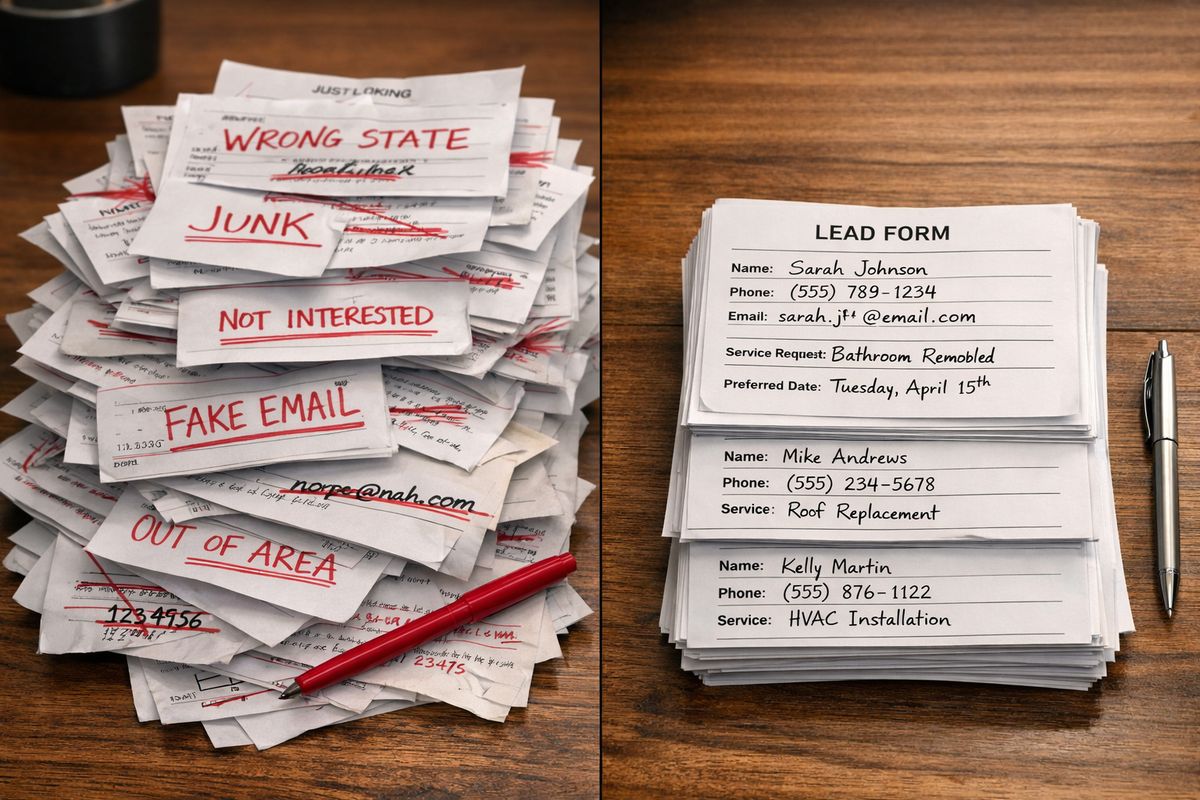
For local service businesses, that usually means qualified phone calls, estimate requests, appointment bookings, and jobs that fit your actual service mix. If your campaign sends twenty inquiries but fifteen are outside your coverage area, two want the wrong service, and three are price shoppers with no intent to buy, that is not success. It is noise.
Good PPC management keeps asking a simple question: did this lead have a real chance to become revenue?
That sounds obvious, but plenty of agencies stop at softer metrics because softer metrics are easier to make look good.
What Counts as a Good Lead in Local Service Businesses
A good lead for a local business usually has five traits. The person is in your service area, needs the service you actually want, has enough urgency to act, fits the budget range you can profit from, and shows real buying intent.
For a roofer, that could mean someone in a target city who needs storm damage inspection or full replacement, not somebody asking about a tiny patch job three counties away. For a med spa, that could mean a person searching for a specific treatment in Gainesville, not general curiosity from another state. For an attorney, that could mean someone seeking representation now, not a student doing research for a paper.
Ten junk calls are worse than three real opportunities because junk leads waste more than ad spend. They eat up admin time, salesperson attention, and energy.
Why Cheap Cost-Per-Click Can Still Be Expensive
Low cost-per-click sounds great until you look at what those clicks were worth.
Cheap clicks often come from weak-intent searches, loose location settings, informational keywords, or broad match targeting that pulls in unrelated traffic. You can brag about paying less per click while quietly paying more per qualified lead.
That is the trap.
Profitable traffic often costs more because it comes from people who are ready to act. Someone searching “emergency AC repair Gainesville FL” will usually cost more than someone searching “how does air conditioning work.” One click is expensive and useful. The other is cheap and mostly worthless.
If your current account shows low CPCs but weak results, your next move is not to celebrate efficiency. Your next move is to inspect what you actually bought.
How to Spot PPC Waste Before Another Dollar Goes Out
You do not need deep platform knowledge to spot a sloppy account. A few warning signs tell the story quickly.
If campaign performance keeps getting explained with vague phrases like “the algorithm is learning,” be careful. If reports focus on clicks but avoid call quality, be careful. If nobody can show actual search terms, landing page performance, or clean conversion tracking, be very careful.
A smart place to start is a structured review. That is exactly what a hands-on account checkup before any changes are made should do. You want to find the leaks before you pour in more money.
Search Terms That Should Never Have Triggered Your Ads
This is where PPC waste gets obvious fast.
Your ads should not be showing for unrelated services, do-it-yourself searches, job seekers, freebie hunters, or cities you do not serve. Yet that happens constantly when accounts rely too heavily on broad match keywords without enough negative keywords to block junk.
Search terms reveal the truth. If your account is paying for searches that make you say, “Why on earth did my ad show for that?” your management is not tight enough.
A few bad clicks here and there may not sound like a crisis. But if those clicks happen every day, they quietly drain hundreds or thousands of dollars each month.
Campaigns Sending People to Weak Pages
Even strong keywords can fail if the landing page is weak.
A lot of businesses send paid traffic to the homepage because it is already there. That is convenient, but convenience is expensive. A homepage usually asks visitors to do too much thinking. It talks about everything, points in six directions, and makes the person hunt for the next step.
Paid visitors should land on a page that matches the ad they clicked. If the ad mentions roof replacement, the page should be about roof replacement. If the ad offers same-day plumbing help, the page should make that promise feel immediate and credible.
Weak mobile layouts hurt here too. Most local service traffic comes from phones. If buttons are hard to tap, the number is buried, the page loads slowly, or the form feels annoying, conversion rates fall even when the ad targeting is solid.
Tracking That Makes Reports Look Better Than Reality
Bad tracking can make mediocre management look impressive.
One common problem is duplicate conversions. Another is counting soft actions that do not mean much, like page views, button clicks, or short accidental calls, as if they were qualified leads. Some accounts count every call the same way, even when half are spam, wrong numbers, or vendors trying to sell software.
That creates fake confidence.
Your reports should separate signal from noise. A real conversion setup tracks calls, forms, and meaningful actions clearly, then filters out junk as much as possible. Without that, nobody can tell what is working. You are just reading nicer-looking fiction.
The Buying Criteria That Matter Most When Choosing PPC Advertising Management
If you are comparing agencies, consultants, or in-house options, your decision should come down to a handful of practical criteria. Not branding. Not slide decks. Not a polished pitch.
The best provider is the one that protects budget, communicates clearly, and ties the work back to real business results.
Transparency in Spend, Fees, and Access
You should have direct access to your Google Ads account. You should know what the platform spend is, what the management fee is, and where both numbers live.
Anything less creates risk.
If billing runs through somebody else’s account and reports only show cherry-picked data, you lose visibility into your own advertising. If a provider talks about “proprietary systems” to avoid giving direct platform access, that is a warning sign, not a premium feature.
Transparent PPC management is boring in the best way. You can log in, see spend, see campaigns, and understand the fee structure without decoding anything.
Account Ownership and Who Actually Touches the Work
Ask a simple question: who is actually inside the account each week?
That matters more than the agency logo. Some providers sell the work with a senior strategist, then hand the day-to-day management to a junior coordinator or an outsourced team you never meet. Others rotate account managers so often that every call starts from zero.
Consistency affects results. It also affects speed.
If your campaign breaks on a Friday afternoon, you do not want three layers of internal handoff before somebody notices. You want clear accountability and somebody close enough to the work to fix problems fast. This is one reason many businesses compare the tradeoffs between a direct consultant relationship and a bigger team setup before signing anything.
Speed of Communication and Decision-Making
PPC moves too fast for slow communication.
If lead volume drops, your budget spikes, a call tracking number breaks, or a landing page form stops working, delays cost real money. Every extra day of silence means more wasted clicks or missed opportunities.
That is why responsiveness is not a soft benefit. It is part of performance.
You are not hiring a vendor to send a report once a month. You are hiring somebody to make decisions quickly when something needs attention. If getting an answer feels like filing a support ticket into a black hole, the relationship is a bad fit.
Conversion Tracking and ROI Reporting
At a minimum, your reporting should show spend, calls, forms, cost per lead, and some way to judge lead quality. Better setups go a step further and connect leads to booked jobs or closed revenue.
That is what complete management looks like.
If reports stop at clicks, impressions, and click-through rate, you are missing the business part of the conversation. A campaign can have a strong click-through rate and still bring in lousy leads. A campaign can also have fewer total conversions but produce more actual revenue because the intent is stronger.
The more your provider can connect traffic to revenue, the less guesswork you live with.
Industry Fit and Local Market Understanding
Local PPC is not generic.
A Gainesville service business has different realities than a national eCommerce brand. Service areas matter. Neighborhoods matter. Mobile call behavior matters. Emergency searches behave differently from planned project searches. Hurricane season and storm damage can change demand patterns fast for roofers and restoration companies. College-town seasonality can shift traffic too.
If a provider understands your category and your market, campaigns usually get sharper sooner. Not because local magic exists, but because fewer dumb assumptions slip into the account.
The Main Types of PPC Management Options
Most businesses buy PPC help in one of four ways. None is automatically right or wrong. The better choice depends on your budget, internal bandwidth, and how much direct communication you want.
Freelancer or Solo Operator
A freelancer or solo operator can be a strong fit if you want direct communication, lower overhead, and fewer layers between strategy and execution. You usually know exactly who is doing the work, which is refreshing after dealing with big-agency churn.
The catch is capacity.
If one person handles too many accounts, response time can slip. Vacation coverage can be thin. Landing page support, design help, or tracking setup may also be limited unless outside specialists get involved.
Still, for some businesses, owner-level accountability beats a larger but less attentive setup.
Small Specialized Agency
This is often the sweet spot for small-to-mid businesses.
A good small agency usually has more process than a solo consultant and more access than a large enterprise shop. You get enough structure for reporting, tracking, and page support, but without feeling like your account got dropped into a giant system where nobody answers the phone.
This is also where a zero-waste approach tends to stand out. If your provider is serious about cutting search term waste, tightening geography, improving landing pages, and watching lead quality closely, your budget gets treated more like an investment and less like a volume target. That is exactly the lane Imperium Marketing Solutions aims for.
Large Agency or Enterprise Provider
Large agencies can make sense if you have a very large budget, multiple stakeholders, lots of markets, and enough internal staff to manage a layered relationship.
For many local businesses, though, the downsides are real. Fees tend to be higher. Communication gets slower. Reporting gets polished but sometimes less useful. Small accounts can feel invisible once the sale is closed.
The sales process may feel impressive, but a smooth proposal is not the same thing as sharp account management.
In-House Management
Managing PPC in-house can work if somebody on your team has the time, skill, and support to do it properly. That means more than knowing where the “create campaign” button lives.
In-house management still requires search term reviews, tracking setup, landing page coordination, testing, and ongoing optimization. If nobody owns those details consistently, the account drifts. One reason businesses outsource is not lack of intelligence. It is lack of uninterrupted attention.
If you are weighing outside help against doing it yourself, it helps to understand what pricing usually includes and where the work actually goes.
Pricing: What You Should Expect to Pay, and What Should Make You Nervous
PPC management pricing is all over the place, which is part of the problem. You can get quotes that sound cheap until you realize almost nothing is included, and quotes that sound premium without any clear connection to better outcomes.
Price matters, but alignment matters more.
Common PPC Management Fee Models
The most common fee structures are flat monthly fees, percentage of ad spend, hybrid models, and performance-based pricing.
A flat fee is predictable. You know what management costs each month, which makes budgeting easier. A percentage-of-spend model rises as your ad budget rises. That can make sense in some accounts, but it can also create a weird incentive where spending more increases the manager’s revenue even if efficiency gets worse.
Hybrid models combine a base fee with a spend-based component. Performance models sound attractive, but you need to read the fine print carefully because “performance” can be defined in ways that favor volume over quality.
No model is perfect. The question is whether the pricing setup rewards budget protection and lead quality, or just higher spend.
When a Low Fee Usually Costs More Later
Cheap management often means one of four things: no real optimization, outsourced labor with thin oversight, weak tracking, or set-it-and-forget-it campaigns.
That is why a bargain price can become the most expensive option.
If somebody charges very little to manage your ads, the work has to shrink somewhere. Maybe search terms get checked once a month. Maybe landing pages are not part of the picture. Maybe nobody notices bad locations creeping in. Maybe automated recommendations stay on because manual review takes time.
If your priority is wasting less, low-fee autopilot is usually the wrong deal. If your goal is cost control, you need active control. A good reference point is learning where ad costs can come down without choking off lead flow, because lower spend is only useful when the right leads keep coming.
How to Judge Value Instead of Just Price
The best way to judge value is to compare what is actually included.
Does the provider help with landing pages, or only buy clicks? Is call tracking clean? Is reporting understandable? Are search terms reviewed regularly? Can somebody make quick changes when something breaks? Is there a plan for improving lead quality, not just lead count?
Good management should either save more wasted spend than it costs, generate more profitable leads than it costs, or ideally both.
If it does neither, it is overhead dressed up as strategy.
Questions to Ask Before You Hire Anyone
A short list of direct questions can save you months of frustration. Use these on every call, even if the pitch sounds polished.
Who Owns the Ad Account and Billing Relationship?
You want your own Google Ads account, your own billing relationship, and full access from day one.
That way, if the relationship ends, your history, conversion data, and campaign assets do not disappear behind a locked door. Account ownership is one of those details that feels small until it becomes a huge problem.
How Do You Handle Search Terms, Negative Keywords, and Waste?
Ask exactly how often search terms are reviewed, how irrelevant traffic gets blocked, and how negative keywords are added over time.
Do not settle for “the system optimizes automatically.” That is not an answer. You want a process. The trick is simple: if a provider cannot explain how budget waste gets found and stopped, budget waste is probably still happening.
What Does Reporting Look Like Each Month?
Ask for a sample report.
You are looking for clarity, not pretty charts. A good report should show what happened, what changed, what the leads looked like, and what gets adjusted next. If it takes ten minutes to figure out whether performance improved, the reporting is doing too much hiding and not enough helping.
Who Writes the Ads and Builds the Landing Pages?
If one company manages the ads and somebody else controls the pages, accountability can get muddy fast.
That does not mean split ownership can never work. It means fixes usually take longer. When click volume is fine but conversion rate is weak, somebody has to own the page experience, not just point fingers at it.
What Happens in the First 30, 60, and 90 Days?
You want a real process here, not vague promises about “optimizing over time.”
Strong providers should be able to explain the first phase clearly: cleanup, tracking fixes, keyword control, testing, landing page improvements, and lead quality review. If the answer sounds like magic, move on.
Common PPC Management Mistakes That Keep Businesses Stuck
Not every PPC problem starts with the agency. Some problems start with the buying decision.
The good news is that most of them are avoidable once you know what to watch for.
Choosing Based on Promises Instead of Process
“More leads fast” is a sales line, not a strategy.
A real process explains how targeting will improve, how junk searches will be blocked, how landing pages will be tightened, and how lead quality will be measured. Without that, a promise is just a prettier version of hope.
Letting One Report Metric Tell the Whole Story
A single metric can make a weak campaign look strong.
Low cost per click, high click-through rate, and rising conversion totals can all be misleading if the leads are poor. The number that matters most is not the one that flatters the report. It is the one that tells you whether paid traffic is turning into real business.
Sending Paid Traffic to a Generic Homepage
This mistake wastes money constantly because it feels harmless.
Your homepage is built for everyone. Your ad campaign is not. Paid traffic needs a focused page with one message, one offer, and one obvious next step. Anything else creates friction, and friction kills lead volume.
Ignoring Follow-Up Speed After the Lead Comes In
Even excellent PPC management cannot save slow follow-up.
If calls go unanswered, forms sit overnight, or estimate requests wait until the next day, good traffic still goes cold. Paid search often catches people at the exact moment they want help. Miss that moment and your cost per lead means very little.
Best-Fit PPC Setups by Business Type
Different businesses need different account structures. Good management reflects the way your sales process actually works.
Local Gainesville and North Central Florida Service Businesses
For local service businesses, tight geography matters a lot. You want campaigns focused on service areas you can reach profitably, mobile-first ad experiences, and landing pages built around trust and speed.
That means obvious phone numbers, fast load times, strong local proof, and clean call tracking. In a market like Gainesville, where somebody may search from a job site, a parking lot, or the waiting room at North Florida Regional, the easiest next step usually wins.
If your business depends on calls, your campaigns should be built around making the phone ring with the right kind of caller.
Multi-City Home Services and Roofing Companies
Once you serve multiple cities, account structure needs more discipline. Different markets often need different budgets, ad messaging, and landing pages. Storm demand can spike one market while another stays flat. Lead routing also gets trickier.
That means campaigns should usually be separated by market, not dumped into one blended account where the best city subsidizes the worst one. Better call qualification matters here too, because a bad lead routing setup can waste great traffic.
Small-to-Mid Businesses With Limited Internal Marketing Time
If nobody on your team wants to spend hours decoding ad dashboards, your best fit is a management setup that keeps communication simple and direct.
You need clear reporting, quick answers, and somebody who can spot issues before they become expensive. Fancy dashboards are not helpful if your office manager still has no idea why spend jumped 40 percent last week.
For a lot of businesses in this position, practical support beats presentation every time.
What Good PPC Management Looks Like in the First 90 Days
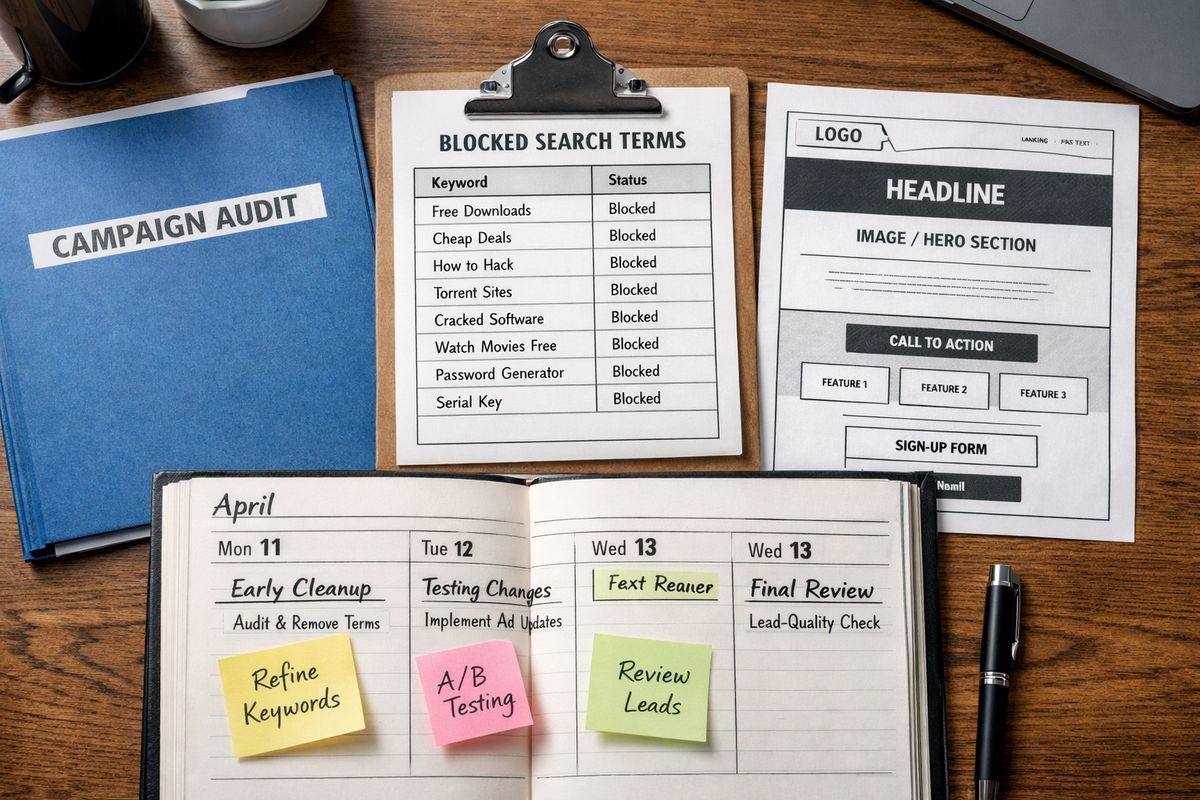
The first 90 days should not feel like magic, but it also should not feel stagnant. Good management usually follows a pattern: stop the obvious waste, tighten the account, then improve quality and efficiency through testing.
First 30 Days: Cleanup and Tracking
The early phase is about control.
That usually means checking account access, confirming billing ownership, fixing conversion tracking, reviewing search terms, tightening keyword match types, building negative keyword lists, checking location settings, and looking for landing page leaks. The goal is not to reinvent everything in one week. The goal is to stop obvious waste first.
Days 30 to 60: Testing and Tightening
Once the leaks are under control, useful testing starts.
This is when ad copy gets tested, bids get refined, locations get adjusted, schedules may shift, and landing pages get improved based on actual behavior. Sometimes the biggest gains come from simple changes, like removing low-intent queries, improving the mobile call button, or rewriting the headline to match search intent more closely.
Disciplined iteration beats big dramatic changes here.
Days 60 to 90: Lead Quality and Cost Control
By this point, the focus should move beyond platform metrics and into lead quality.
Which campaigns produce good calls? Which keywords create junk? Which locations look decent on paper but do not turn into revenue? Budget should start moving harder toward what works and away from what merely looks active.
This is where PPC starts feeling less like gambling and more like a controlled system.
A Simple Next Step Before You Sign Anything
Before you hire anybody, review one recent month of search terms, conversions, and landing pages. Not the sales pitch. Not the dashboard summary. The actual guts of the account.
Look at what searches triggered your ads. Look at what got counted as a conversion. Look at where paid clicks landed and what happened next. Then use the questions in this guide to judge whether the management in front of you will protect your budget or keep feeding Google’s bottom line.
Try one thing today: ask any provider to walk through wasted search terms, lead tracking, and account ownership in plain English. If that conversation gets slippery, your answer is already there.