


Your advertising budget matters, and deciding where to put those dollars can feel like a high-stakes puzzle. You might be hearing buzz about connected TV (CTV) ads and wondering whether they offer a better return on investment than your usual cable TV commercials. In this post, you will explore the ins and outs of CTV advertising return on investment, compare it to traditional TV, and uncover how to maximize results for your brand.
Explore CTV advertising ROI
CTV advertising return on investment often comes down to precision targeting and the ability to measure performance in real time. Instead of relying solely on broad demographics, you can tap into a wealth of viewer data, delivering your ads to specific households that match your ideal customer profiles. When your ads reach the right people at the right moment, every dollar you spend goes further toward driving brand awareness and conversions.
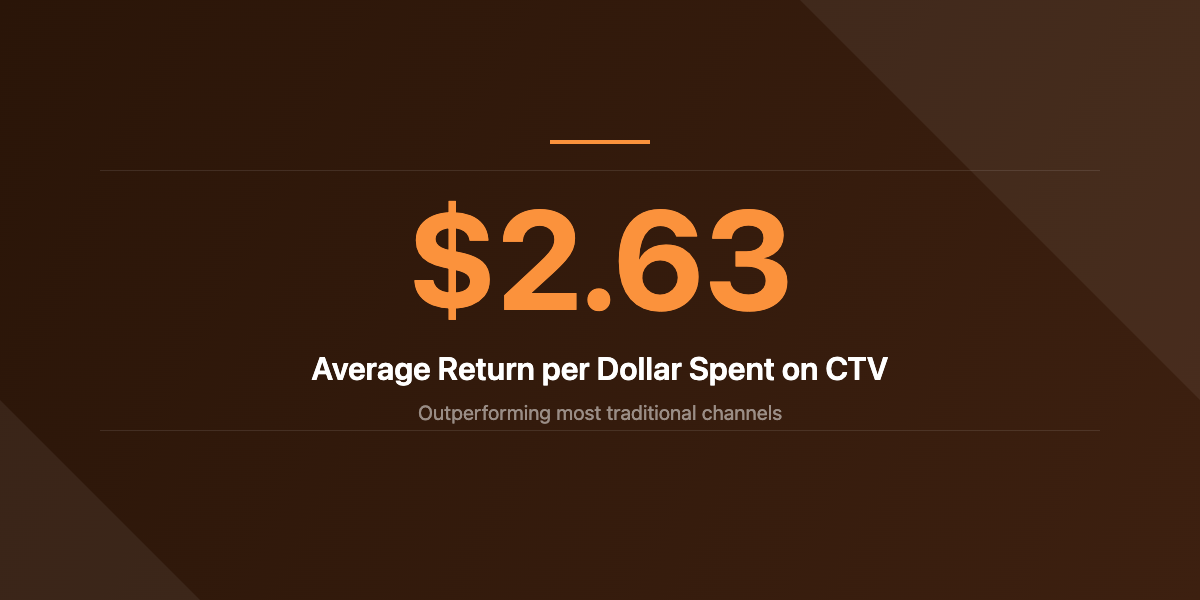
On top of better targeting, CTV ad platforms typically provide detailed metrics, such as the number of impressions delivered and the time viewers spend watching your content. This level of transparency helps you see how effective each campaign truly is. You can then refine your approach and adjust the budget to channels or audience segments that yield the highest response.
Compare CTV to traditional TV
If you’re used to running TV commercials, you might wonder whether the tried-and-true method is still your best bet. Traditional television ads can reach a large audience, but it’s more challenging to know precisely who is tuning in. When you dig into the data, you might find yourself paying for a lot of impressions that fall outside your target market. For more details on this, check out the traditional tv advertising roi analysis.
With CTV, you gain the ability to place your ads on popular streaming platforms, from news channels to on-demand shows. By harnessing digital delivery, CTV ads ensure your message appears on TV screens that your potential customers actually watch. It’s a more personalized approach that can foster higher engagement compared to traditional ads that run on a fixed schedule, often at times or on channels irrelevant to your audience.
The other key advantage is that you only pay for impressions that align with your targeting parameters. This can lead to a more efficient use of your budget, especially as more and more viewers migrate to streaming services. Instead of casting a wide net on cable channels, you can focus on the programs and apps that matter to your niche.
Examine cost effectiveness
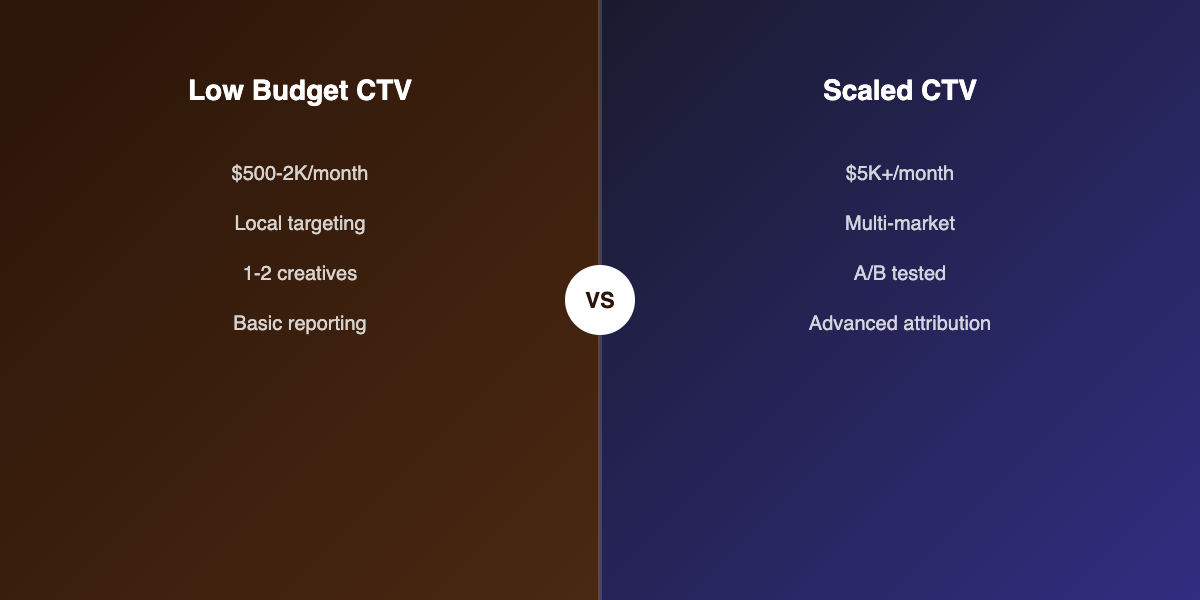
Balancing cost with impact is crucial for any forward-thinking marketing strategy. With CTV, you can tailor your spending to fit your exact goals. Lower costs are possible when you leverage robust targeting features and avoid broadcasting to uninterested audiences. For example, if you sell specialized software for small businesses, you can select categories like “business news watchers” or “entrepreneurship enthusiasts.” This flexibility in targeting can help you maximize every penny spent.
In contrast, cable networks may attach premium price tags to popular shows, yet you have little control over who actually sees your spot. Still, it’s important to check performance metrics for both mediums to make a fair comparison. If you want a closer look at where you might gain the best results, you can review how ctv vs linear tv advertising effectiveness shapes up. By focusing on measurable outcomes, you gain clarity into how well each channel resonates with your audience.
Track success metrics
Finding out if your connected TV campaigns truly pay off means digging into the data. Below are four metrics you can evaluate to see how your ads perform once they hit the screen:
- Completion rate: The percentage of viewers who watch your ad all the way through
- Conversions: How many of those viewers visit your website, request a quote, or complete a purchase
- Frequency: How many times a single viewer sees your ad before taking action
- Viewability: Ensuring the ad appears in a spot where it’s actually seen
These metrics give you the power to identify which platforms and audience segments produce the highest return. The more you know about your viewers and how they respond to your campaigns, the easier it is to refine your ads. As you measure success, you’ll find it helpful to track more specific insights on the roi of connected tv advertising. By analyzing a combination of these indicators, you gain a deeper look at the true impact of streaming ads.
Optimize your CTV investments
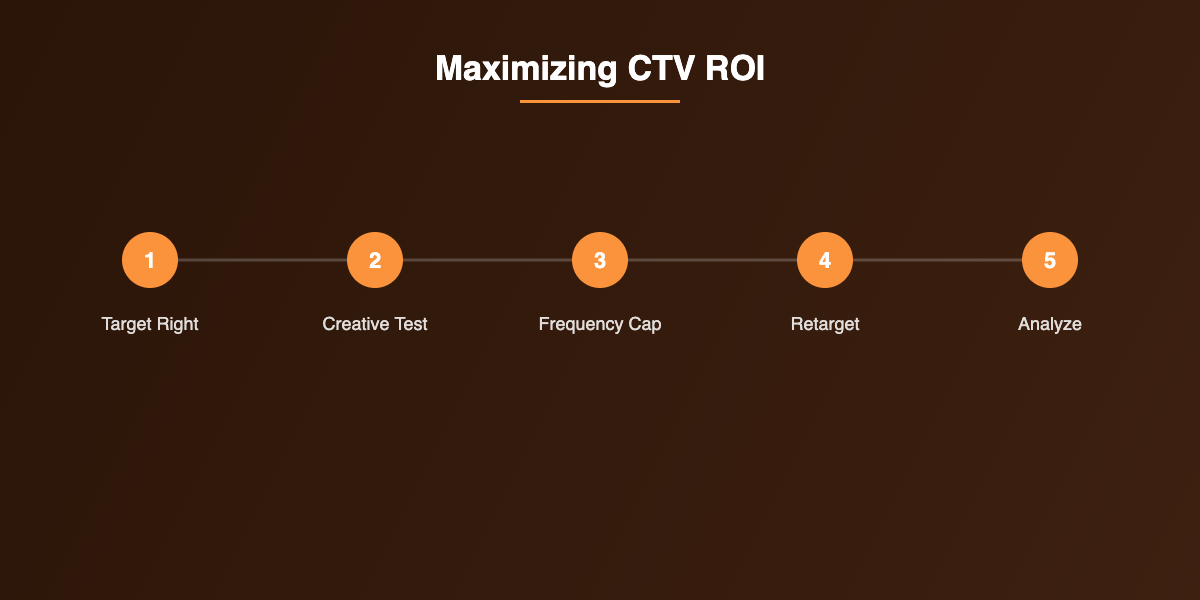
Maximizing your investment involves more than just a good ad spot. Regularly reviewing data on viewership and conversions allows you to reallocate resources to top-performing channels. If a certain demographic responds better, you can focus on content that appeals to that group or test new creative styles that speak specifically to their interests. Experimentation can sometimes reveal niches you hadn’t previously considered.
A common best practice is refreshing your ad creative to keep it compelling. Your audience might enjoy seeing a familiar brand, but they don’t want to be bored with the same content week after week. Combining fresh concepts with a thoughtful schedule helps maintain viewer engagement without overstaying your welcome. For an in-depth look at refining your approach, visit ctv advertising roi comparison to see how different strategies stack up.
Pair your CTV investment with proper conversion tracking to measure the full customer journey, and ensure your local search optimization captures nearby customers who see your streaming ads.
Decide the best value for you
Ultimately, the best advertising path comes down to your unique business goals and audience. If you want higher control over who sees your ads and need the flexibility to pivot your approach quickly, CTV could be the perfect match. Its data-driven nature ensures you can monitor and modify campaigns in real time, so no dollar goes to waste. However, if a portion of your customer base still consumes traditional television content, a combined approach might work well to reach multiple segments simultaneously.
Remember to balance the larger picture alongside precise analytics. It’s easy to get caught up in measuring everything to the last detail, but you don’t want to overlook the broader brand awareness that comes from having your ad appear on streaming platforms or cable TV. When you find the right balance, your marketing budget becomes an engine for growth.
By focusing on the value delivered, rather than the cost alone, you can make smarter decisions for your brand. Whether you choose to go all-in on CTV or strike a balance between cable and streaming, you’ll be positioning your business to reach audiences in the most engaging and measurable ways possible.